Child & Family Wellbeing
At Stamford Park Primary School, we believe mental health and wellbeing is a key factor in the success a child can have in life. We are committed to creating a safe, inclusive and supportive environment for all to thrive and grow.
All children should feel supported with their wellbeing, and so we provide a comprehensive provision for all pupils, alongside targeted support for those who need it.
Universal Support for All Pupils?
- A supportive environment in which to work
- KAPOW RSE Curriculum
- A well-thought-out behaviour and relationships policy
- Think About Thursday sessions (wellbeing-focused activities)
- Assemblies on key dates or areas
- Mental health and wellbeing focus week
- Quality first teaching
- A key adult for ad hoc support – Emotional Literacy Support Assistants.
- Anti-bullying sessions and focus week
- Zones of Regulation emotional literacy conversations
What Targeted Support for Pupils Needing Additional Help is available?
We believe that for a young person, their problems or difficulties can seem overwhelming, and we understand that they might need support in tackling these situations or feelings. We provide a tiered system of targetted support to ensure a child's needs are met in the most personalised way. Examples of the types of support we offer are listed below:
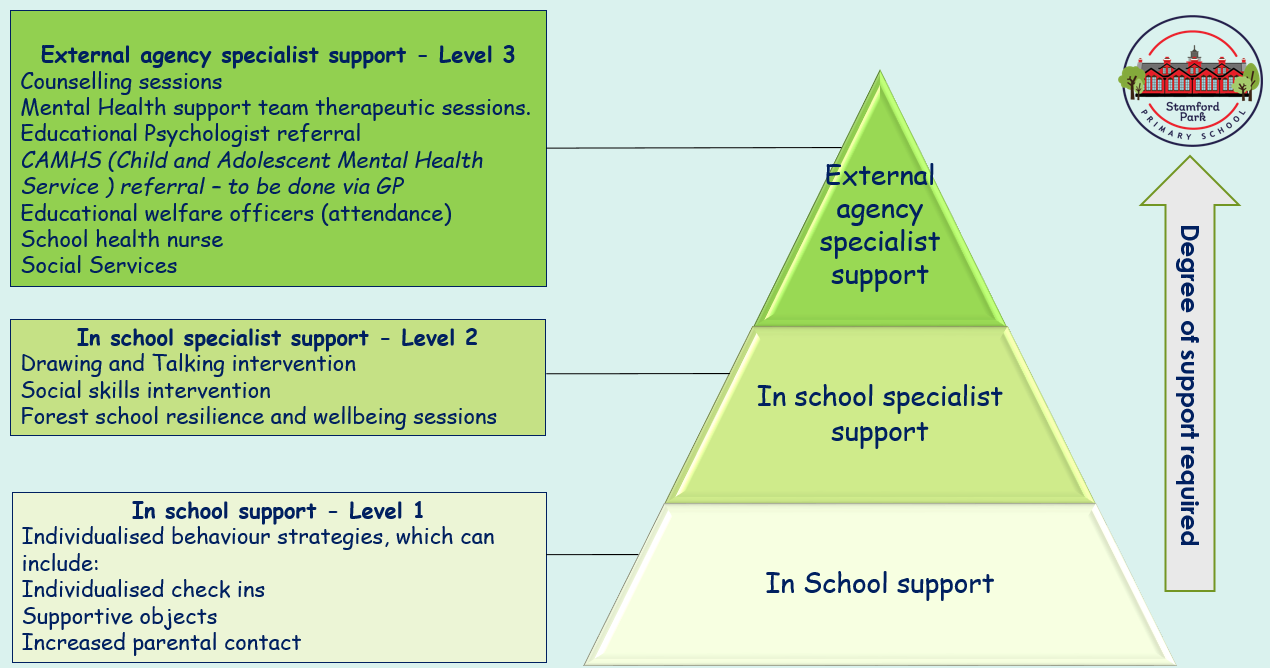
Zones of regulation
"The Zones of Regulation" is a programme which aims to help children notice the emotion they are feeling and then regulate themselves if they are feeling uncomfortable. This is fully embedded in our school.
The programme starts by helping children to identify which zone an emotion or feeling is in.
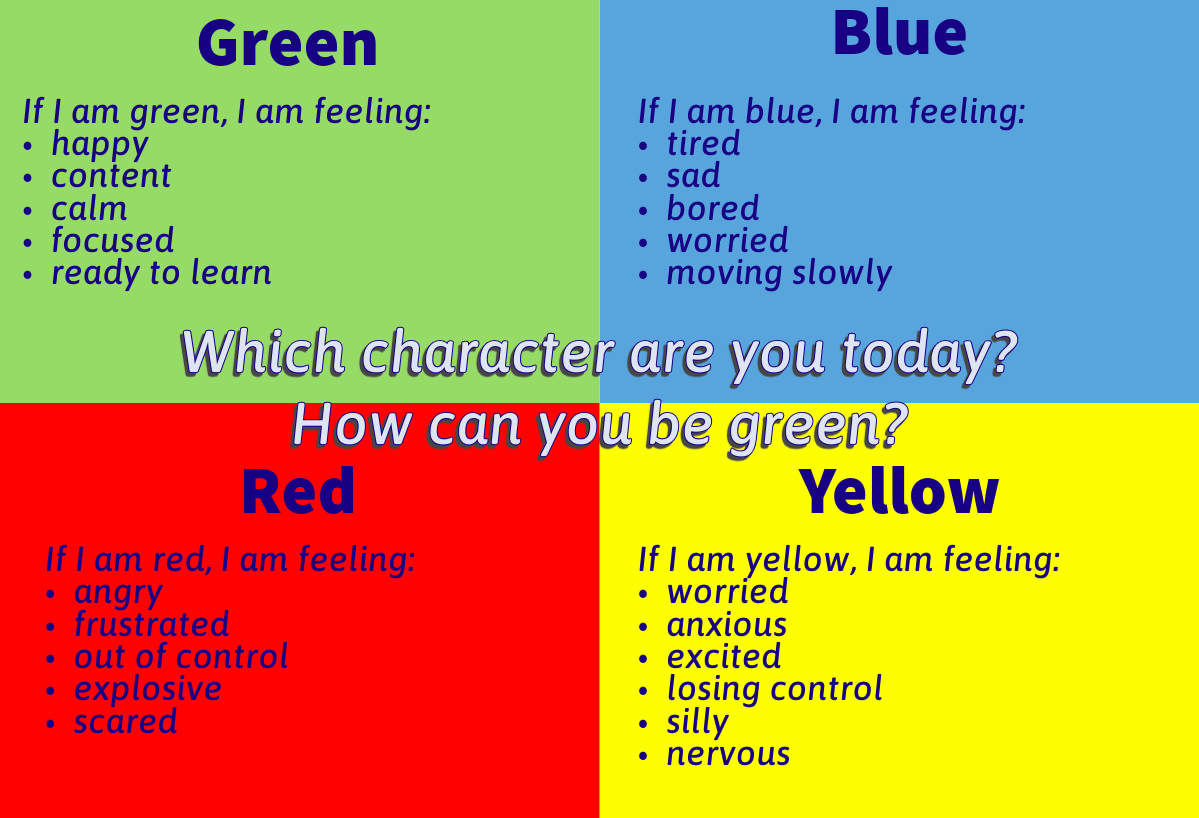
Blue Zone
This is where you would be if you are feeling:
- tired
- sad
- bored
- sick
In general, you are feeling slow and are mostly feeling uncomfortable.
Green Zone
This is where you feel:
- happy
- pleased
- proud
- content
- calm
- ready to learn
This is the ideal zone for children to be in when in class, feeling comfortable.
Yellow zone
This is when there is...
- some loss of control
- you may feel worried
- scared
- frustrated
- behave in a silly way
- be overly excited
In this zone you can be either comfortable or uncomfortable.
Red Zone
This is where there
- is a loss of control
- can also be either comfortable of uncomfortable.
- You could be feeling rage
- fury
- elation
- total fear
The children explore these zones and learn to be able to identify which zone they are in. This is supported by all staff who have been shown this system in school. There are also posters in every room to remind the children. Sometimes children can’t or don’t want to name the emotion, but they can identify which zone they are in.
Children also learn that their feelings and emotions can lead to expected and unexpected behaviours and that those behaviours can have an impact on the children and adults around them. If you are in the red zone and yelling at your friend, it is unlikely that your friend will be in the green zone.
Once children understand the concept of the zones, they will explore ways to help regulate themselves with the support of sensory devices and calming techniques.
We want to help all children recognise when they are beginning to feel uncomfortable in the yellow zone and have a toolbox of ideas to help them regulate themselves.
At Home
You can support your child/children at home by asking them which zone they are in and using I wonder
“I wonder if you are in the yellow zone at the moment? You seem a bit worried.’ Naming the emotion will help them with their emotional literacy and show them that you can see they are feeling uncomfortable.
Exploring sensory ideas to help your child feel calmer will also really help. Some children find colouring, play dough, using stress balls, time at the park or reading really beneficial.
You could also try using relaxing music, children’s yoga for deep breathing exercises or mindfulness.
Place2Be courses and information
Place2Be has developed this free online parenting course in partnership with SLAM (South London and Maudsley-NHS Foundation Trust). It's based on tried and tested techniques and experiences of supporting children, young people, and their families.
LGBT+
LGBT stands for Lesbian, Gay, Bisexual, Transgender. The “plus” represents other sexual identities.
At Stamford Park Primary School we celebrate that our children come from different families. We know that like many other schools in the UK, some children have a mum and a dad, some children live with just one parent, some children live with their grandparents and some children have two mums or two dads.
It is important to us at Stamford Park that we represent different families in our community, as we know that children who see their families reflected in class and around the school will grow up to be confident, respectful and successful citizens. We believe that supporting children in this way is vital to their well-being.
Aside from our moral duty, it is also our statutory duty to teach children about different families and relationships and, therefore, all primary schools in England are expected to teach Relationships Education. When teaching Relationships Education, we ensure that the needs of all pupils are appropriately met, and that all pupils understand the importance of equality and respect. We ensure that all of our teaching is sensitive and age appropriate in approach and content.
In order to prepare children for the diverse society they live in and to prevent bullying and discrimination, it is important to talk about differences in general and different families in particular. At Stamford Park, the children learn about and celebrate different family structures primarily through our PSHE scheme of work – Kapow and science scheme of work. All children are encouraged to talk positively about their own and each other’s families and the school does not tolerate any homophobic, biophobic or transphobic language.
Below are some useful links if you would like to find out more, including some recommended books:
https://www.kidsreadtheworld.com/lgbtq
https://www.theproudtrust.org/
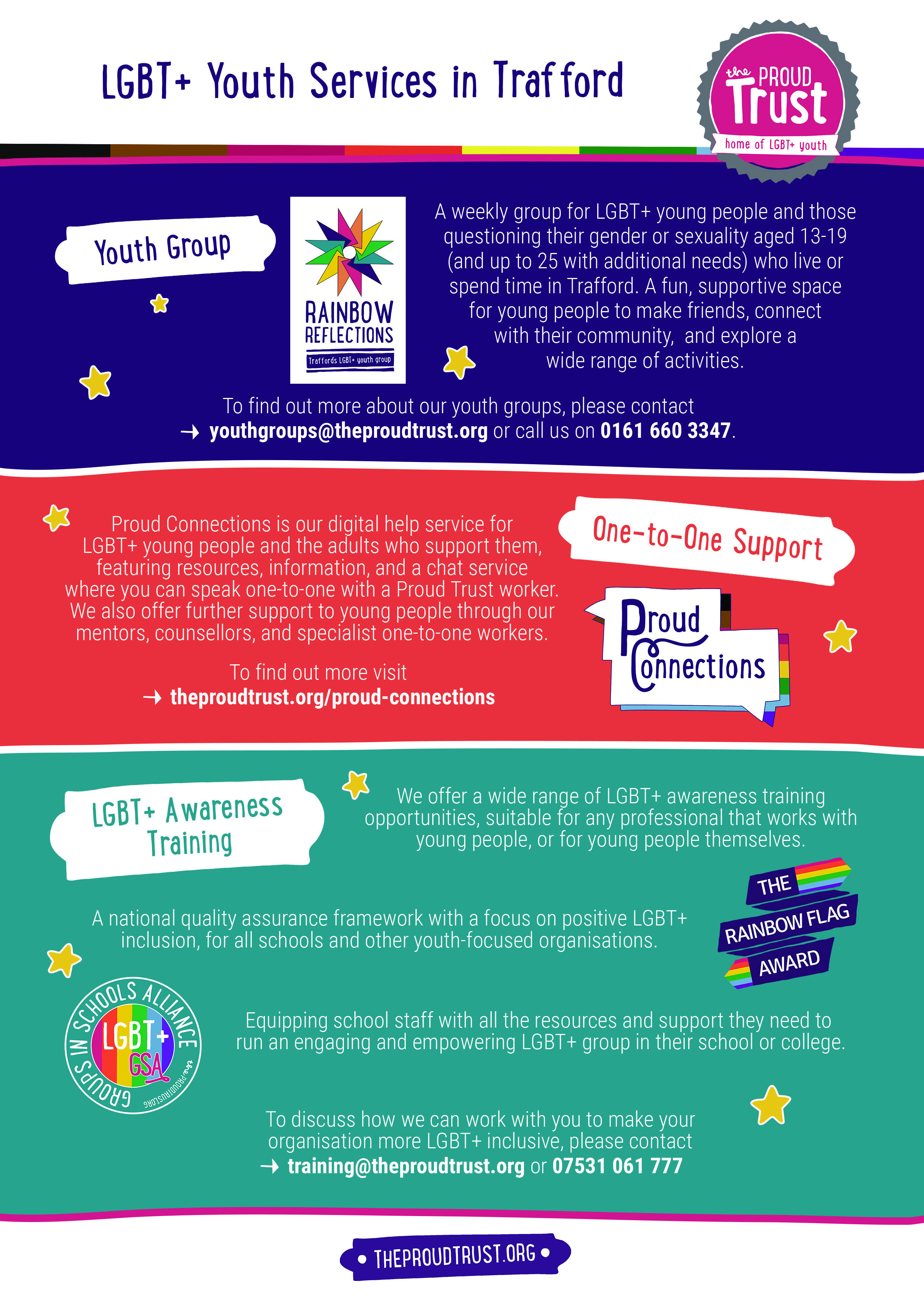
External support for Mental Health
Here we have some useful places you may choose to visit for support:
The Counselling and family centre
Place2Be Parent Smart - support and training courses
Trafford Sunrise - Mental health support and training for parents and carers
Family Lives - Support in a range of areas for families